
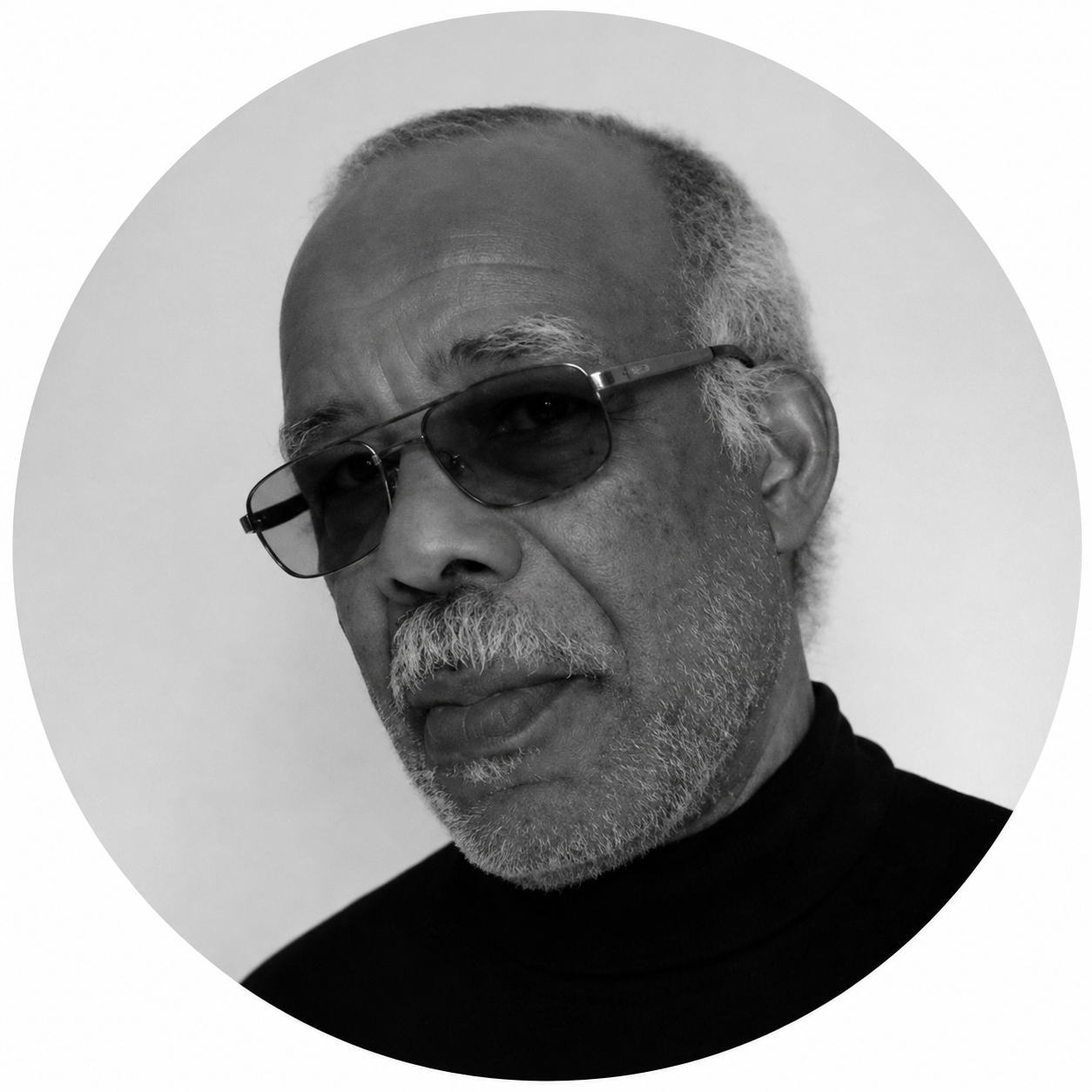
01 / Statement
We make images for the space between what is seen and what is remembered.
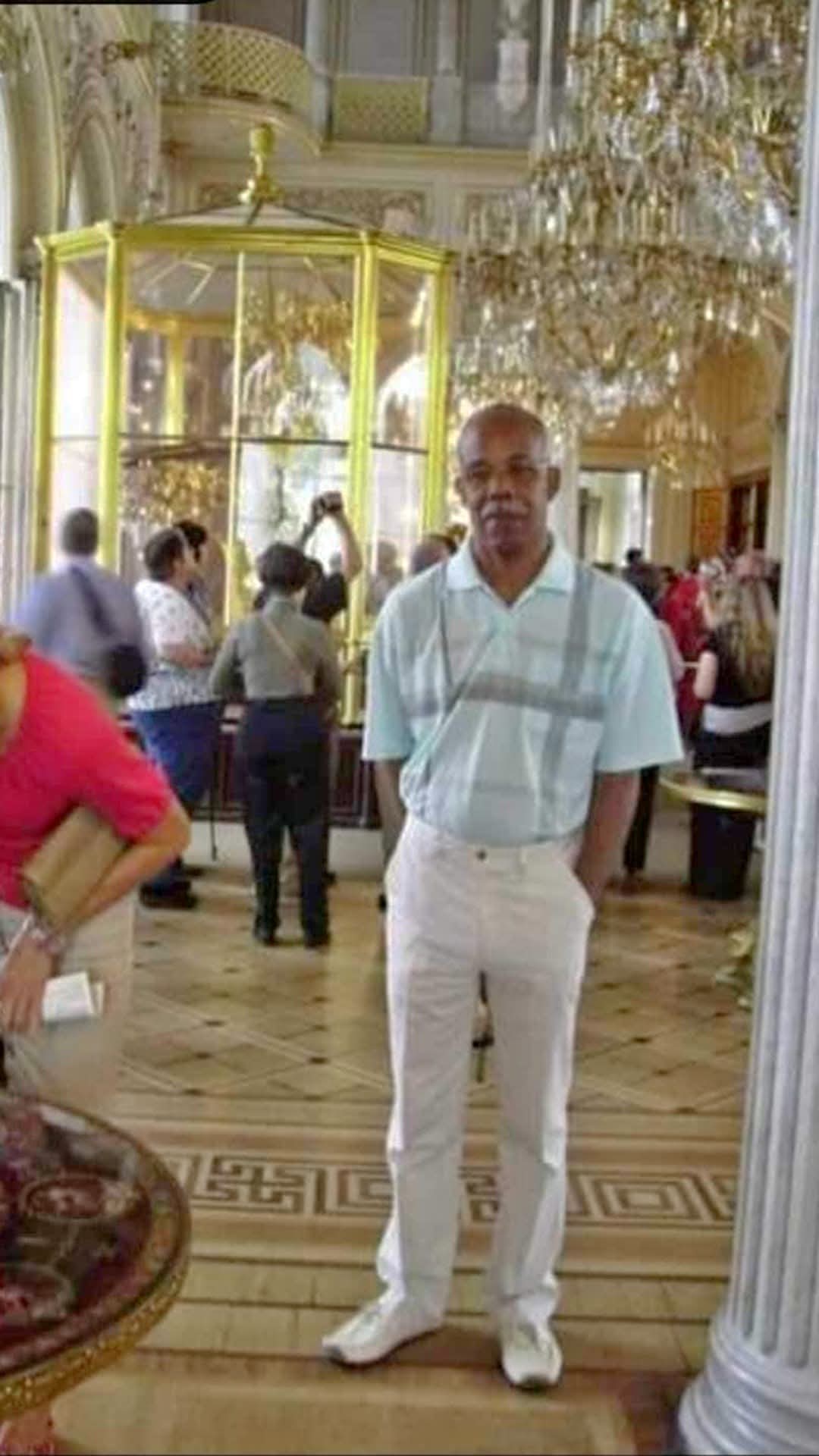
To be an artist, for me, is neither a passing choice nor an inclination toward wonder for wonder’s sake. It is an intellectual and aesthetic act, an inner journey in which thought intersects with feeling, vision with experience, and matter with spirit. It is a form of dwelling within an open space of possibilities, where I search for my own balance and for a meaning that transcends the boundaries of form to reach the realm of symbolic liberation. From this perspective, the studio has become much more than a place in which I work; it is a space for contemplation, listening, and confrontation. In my chosen solitude within it, I allow the painting a degree of freedom to lead me toward its own possibilities before imposing upon it what I want from it. Painting, in its first moment, is not the execution of a fully formed idea so much as the discovery of something that has not yet become clear. A painting often begins with an obscure question, and it is the colours, lines, masses, and empty spaces that gradually open the way toward an answer I did not know beforehand.
Yet working in the studio does not always belong to a state of tranquillity; at its core, it is a condition of creative tension. My relationship with the space, with my tools, and with the presence and absence of light continually becomes a silent confrontation through which elements are rearranged, relationships are tested, and meaning is reconstructed. Light is not merely a technical condition of visibility; it is an active pictorial element. Nor is shadow simply the absence of light; it is another space through which the image is composed and its meanings are generated. Although the studio overlooks something resembling a “nowhere,” every new painting places me in direct confrontation with the space that embraces my artistic experience. I spend long hours arranging objects, observing the paths of light, and searching for the moment when the elements come together—or collide—in a productive way. It is as though the conditions of creation are not given to the artist once and for all, but are reinvented with every painting, with every blank surface waiting to be transformed into a field of existence. Perhaps this tension between the artist and his surroundings is not new in the history of art. Van Gogh himself lived within his studio and maintained a constant dialogue with objects, light, and colour. Yet the contemporary artist faces a different challenge: to establish a direct relationship with the painting, to listen to its inner language without an intermediary, and to make the studio a partner in the creative process rather than merely a setting in which that process takes place.
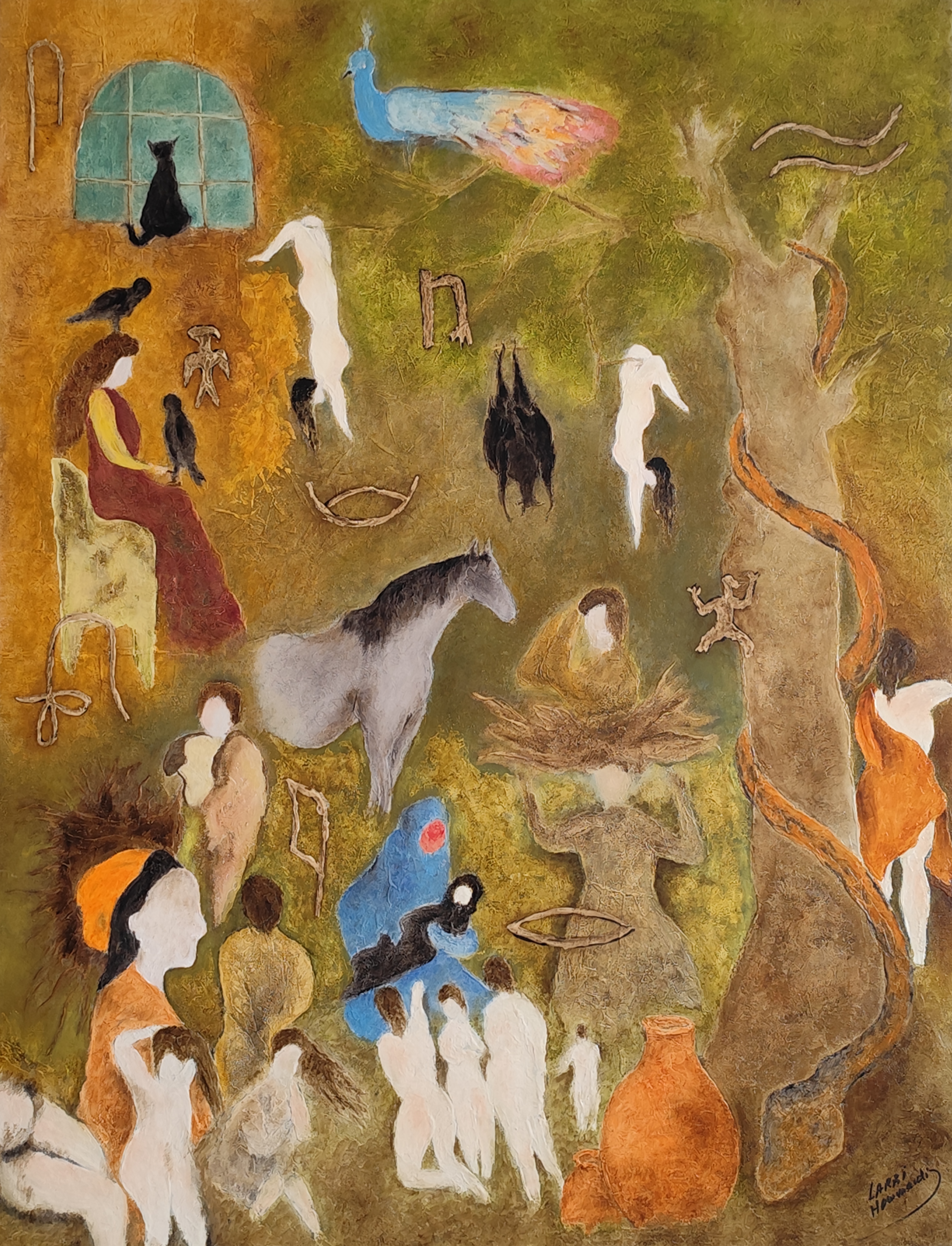
My work in the studio is founded on the interaction of two interwoven perspectives. The first is subjective, arising from a particular sensitivity to colour and the texture of the canvas, as well as from an intuitive response to abstract forms and their possibilities. The second is imposed by the studio itself as a pictorial space with its own laws and rhythm, shaped by light and shadow, by the positioning of objects, and by the distances between them. From this interaction emerges what I regard as the essence of the experience: the encounter between aesthetic emotion and technical discipline. Freedom in art does not mean the absence of structure, just as structure does not mean submission to rules. It is a dialectical relationship between what the work demands and what I resist within it; between what I know and what I discover; between what I have planned and what creative chance brings forth. Thus, the studio has become, for me, a laboratory in which freedom coexists with rigour, intuition with knowledge, and emotion with construction.
My artistic experience began within the traditions of realism, where I learned to observe form and its details, and to perceive the subtle relationships between light, mass, and space. I then gradually moved toward abstraction before opening myself to avant-garde experiments and modern movements that redefined the relationship between the artist, the subject, and the pictorial surface. Russian art was one of the essential sources in the formation of my vision, with its profound respect for craftsmanship and skill, and its understanding of technical knowledge as a foundational element in the construction of an artwork. I also explored Russian and Romanian religious art, the heritage of the Western Renaissance, and the spiritual currents of Eastern European art, particularly in the work of Marc Chagall, where reality becomes memory and dream, and the image becomes a space in which the visible and the invisible intersect. From Caravaggio and George Frederic Watts, I drew lessons in the power and fluidity of colour, and in the ability of symbolism to transcend the boundaries of the immediately visible scene. Yet inspiration, for me, does not mean approaching imitation. An artistic experience only truly becomes its own when it frees itself from its sources and transforms what it has learned into an independent personal language. This is where the central challenge of my current practice lies: how can elements that initially appear distant from one another be brought together? How can the boldness of contemporary colour meet the rigour of classical structure? And how can the spirituality of Eastern schools enter into dialogue with the innovations offered by modern compositions? I seek to construct this dialogue through overlapping layers of colour, form, and symbol, and to give the image a surreal dimension that liberates it from the logic of immediate reality. In my view, the image should not merely present what we see; it should open the possibility of seeing what cannot be seen. Hence the importance of placing elements within unfamiliar contexts, allowing the painting to become a space for imagination and the viewer a participant in completing its inner world. Art, ultimately, is not a system of prescriptive rules, but a space of responsible freedom. The more deeply I understand the laws of art, the more firmly I believe in the necessity of transcending them when they become an obstacle to vision. A rule may serve as a point of departure, but it should never become a constraint. Technique is a means of attaining freedom, not an end that enslaves the artist. Although the artist’s path is often solitary, the question of innovation remains persistently present: How can I continue to build my own worlds without repeating myself? How can I preserve the sense of wonder with which I began after so many years of work? I find part of the answer in the continual excavation of the self—in that hidden distance between light and shadow, between noise and silence, between memory and dream. Every painting is a new attempt to discover something within, and then bring it into the world in a form that did not exist before. For this reason, when I stand before the outcome of the long dialogue between myself and the studio, I do not regard hardship and tension as obstacles to the work; I see them as part of its very essence. Art does not always emerge from tranquillity. More often, it is born from anxiety, doubt, and the desire to transcend what we accomplished yesterday. The studio, ultimately, is not merely the place where I paint; it is the place where I test my freedom, listen to the silence of colour, negotiate with matter, and rediscover myself. From this continuous dialogue between the artist, the painting, and the space emerges my artistic identity—an identity that does not seek a final rule, but a freedom capable of giving colour a new life, form a new meaning, and imagination an endless horizon.